Best websites / Best Portfolio Websites
10 Best Portfolio Websites in 2026
The best portfolio websites are personal or studio sites that put selected work, a clear role, and an easy contact path on the first screen. They belong to designers, developers, photographers, writers and other creatives who need clients or jobs. You see the person or team, the kind of work, and the next step before you scroll.
By Jeet Bhanushali. Each site scored out of 100 for speed, SEO, security and AI search on 19 November 2026.
| # | Website | Score | Breakdown |
|---|
| 1 | Abhay Rohit | 95 | speed not measured, SEO 100, security 94, AI search 90 |
| 2 | Tobias van Schneider | 85 | speed 72, SEO 89, security 88, AI search 92 |
| 3 | Lee Robinson | 82 | speed 99, SEO 86, security 58, AI search 84 |
| 4 | Josh Comeau | 76 | speed 92, SEO 75, security 70, AI search 68 |
| 5 | Brittany Chiang | 69 | speed 73, SEO 92, security 46, AI search 65 |
| 6 | Nithin M Warrier | 63 | speed 60, SEO 80, security 46, AI search 66 |
| 7 | Chris Burkard | 63 | speed 81, SEO 87, security 46, AI search 38 |
| 8 | Rauno Freiberg | 61 | speed not measured, SEO 66, security 54, AI search 64 |
| 9 | Steph Smith | 59 | speed 84, SEO 53, security 32, AI search 68 |
| 10 | Bruno Simon | 59 | speed not measured, SEO 67, security 46, AI search 65 |
The 10 Best Portfolio Websites
1. Abhay Rohit 95
abhayrohit.com · speed not measured, SEO 100, security 94, AI search 90 · full report
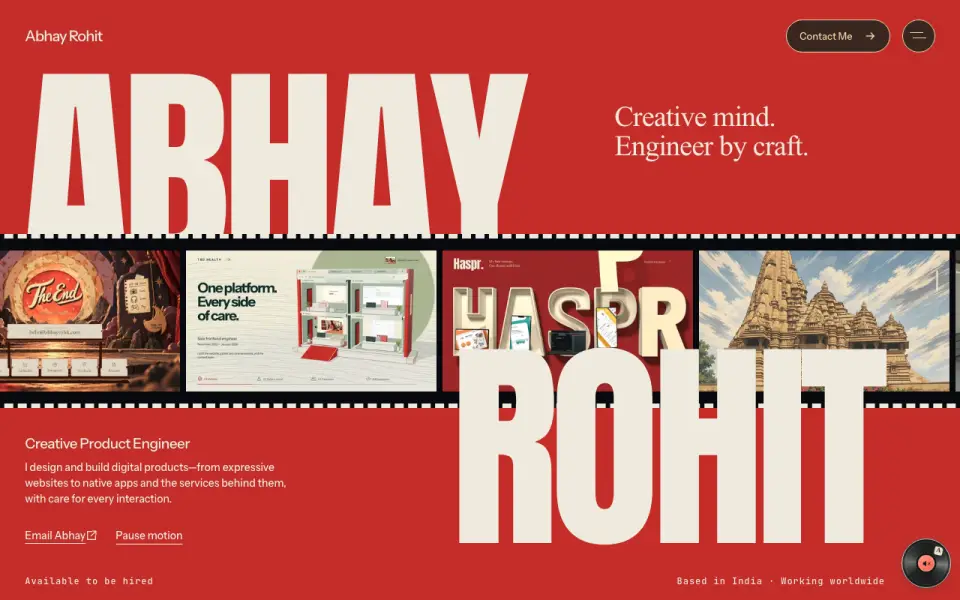
Creative product engineer based in India who designs and builds digital products with interactive scenes.
The homepage uses a type-led hero and film-strip of work with a visible “Pause motion” link that respects reduced-motion preferences.
The case studies could list clearer outcome numbers next to the visual work.
2. Tobias van Schneider 85
vanschneider.com · speed 72, SEO 89, security 88, AI search 92 · full report
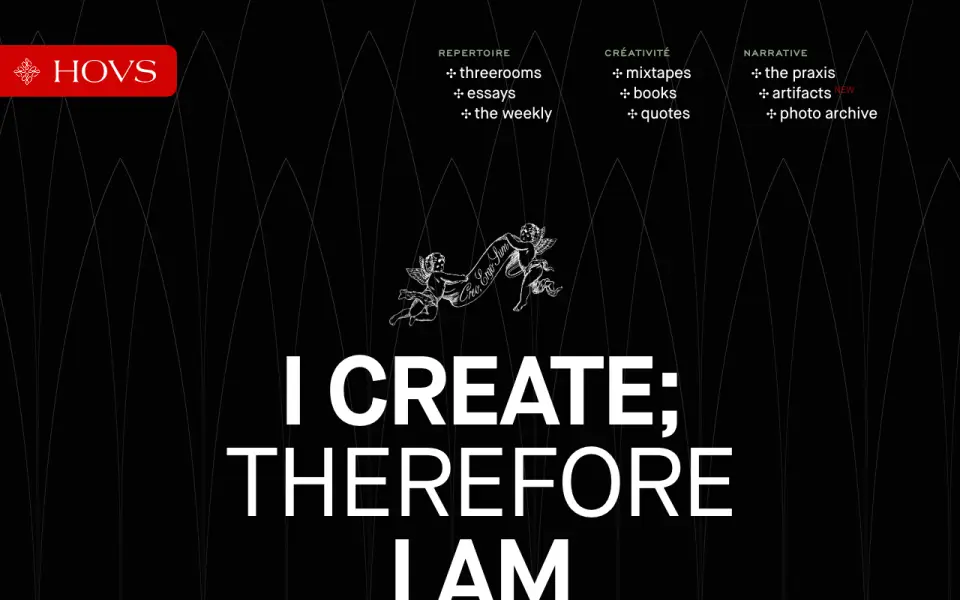
Designer and writer.
Personal brand and process notes sit beside selected work.
Open-to-work status could be clearer for recruiters.
3. Lee Robinson 82
leerob.com · speed 99, SEO 86, security 58, AI search 84 · full report
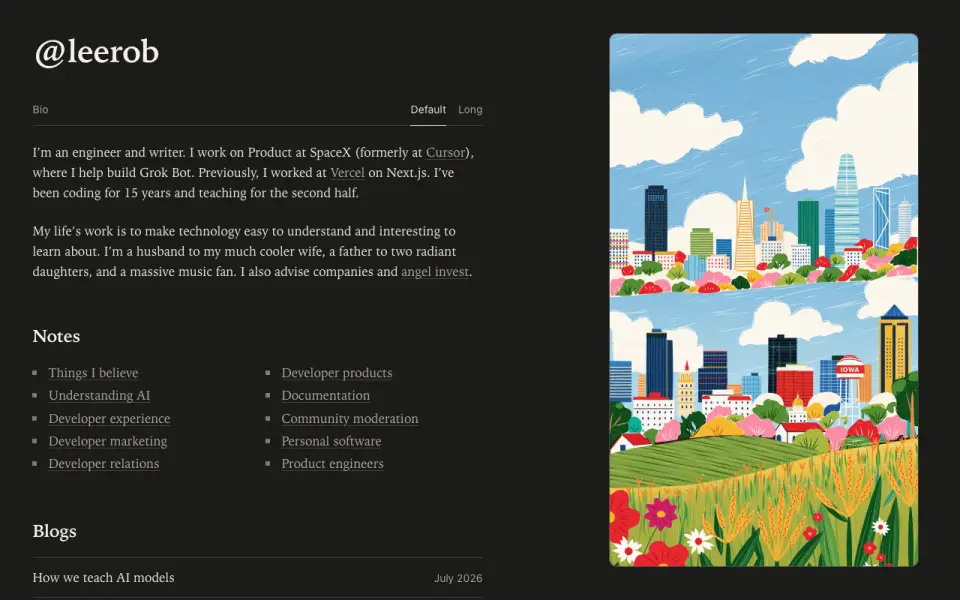
Developer at Vercel.
Projects appear with live links and short descriptions early on the page.
The first screen could state the role more explicitly.
4. Josh Comeau 76
joshwcomeau.com · speed 92, SEO 75, security 70, AI search 68 · full report
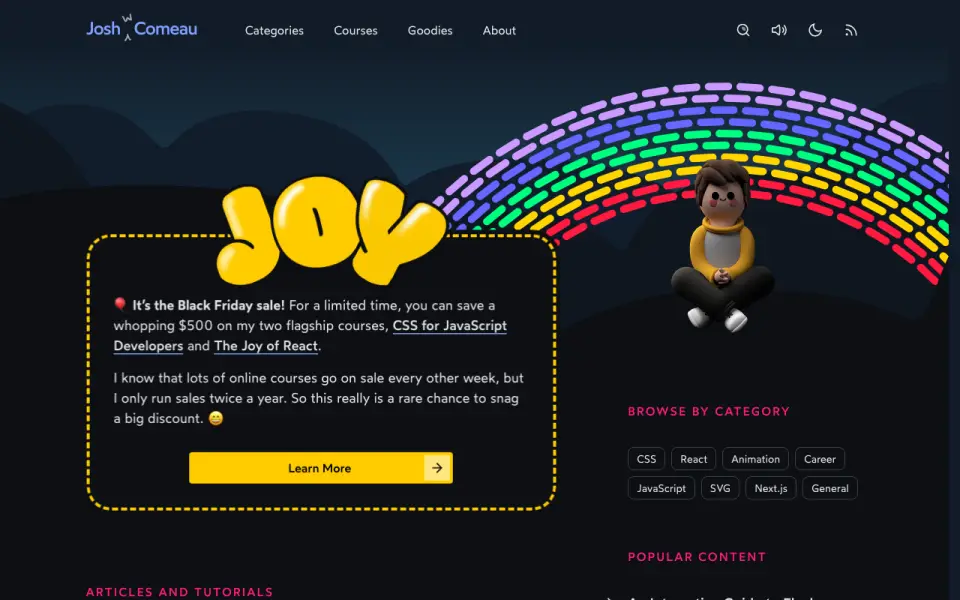
Developer educator whose writing and courses form the portfolio.
A “Popular content” module on the home page guides visitors to the best starting points.
Code examples could surface higher on the first screen.
5. Brittany Chiang 69
brittanychiang.com · speed 73, SEO 92, security 46, AI search 65 · full report
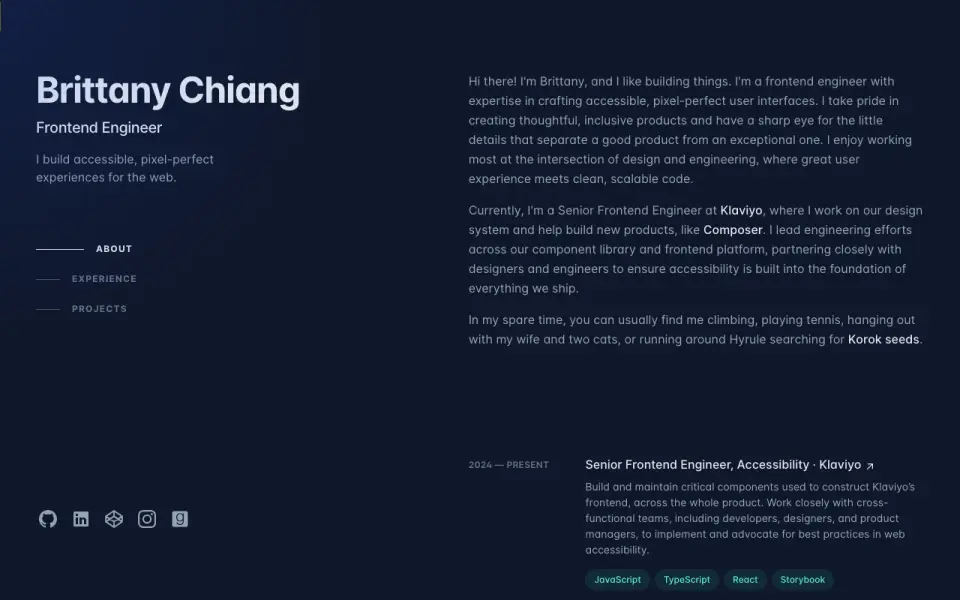
Frontend engineer who builds accessible web experiences.
The sticky sidebar holds name, title, one-line pitch and social links while the main column scrolls through experience and projects.
The selected projects area could link more live demos.
6. Nithin M Warrier 63
nithinmwarrier.com · speed 60, SEO 80, security 46, AI search 66 · full report
Brand and visual designer based in Kochi, India.
The hero states name, discipline, city and offers a “Curious?” button.
Case studies could add quantified results next to the visual branding.
7. Chris Burkard 63
chrisburkard.com · speed 81, SEO 87, security 46, AI search 38 · full report
Photographer focused on adventure and editorial work.
Large, story-led images dominate the homepage with minimal chrome.
Image weights could drop further for slower connections.
8. Rauno Freiberg 61
rauno.me · speed not measured, SEO 66, security 54, AI search 64 · full report
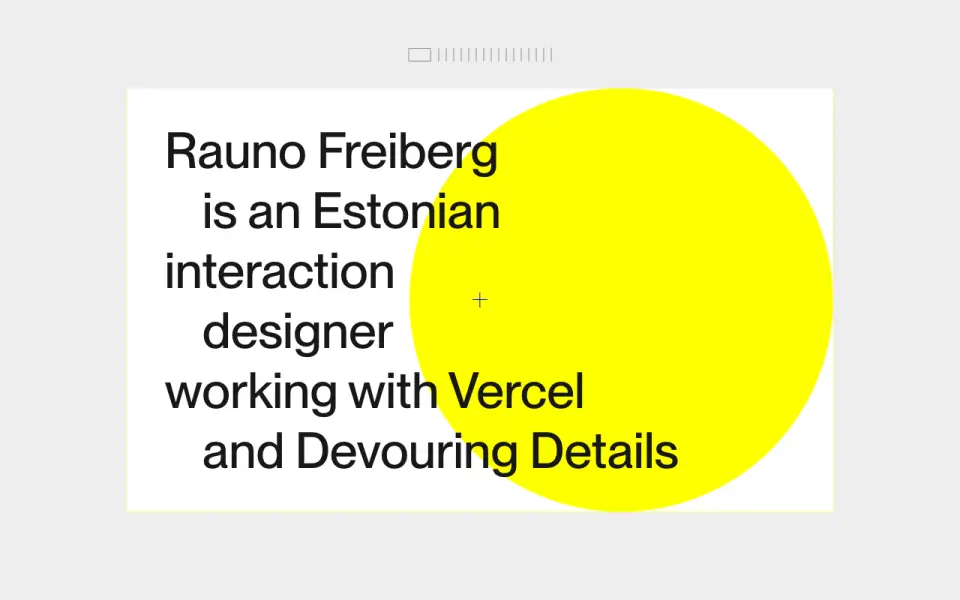
Estonian interaction designer working with Vercel.
A large-type sentence names the role and employer over a simple colored circle.
Project write-ups could expand beyond the current short cards.
9. Steph Smith 59
stephsmith.io · speed 84, SEO 53, security 32, AI search 68 · full report
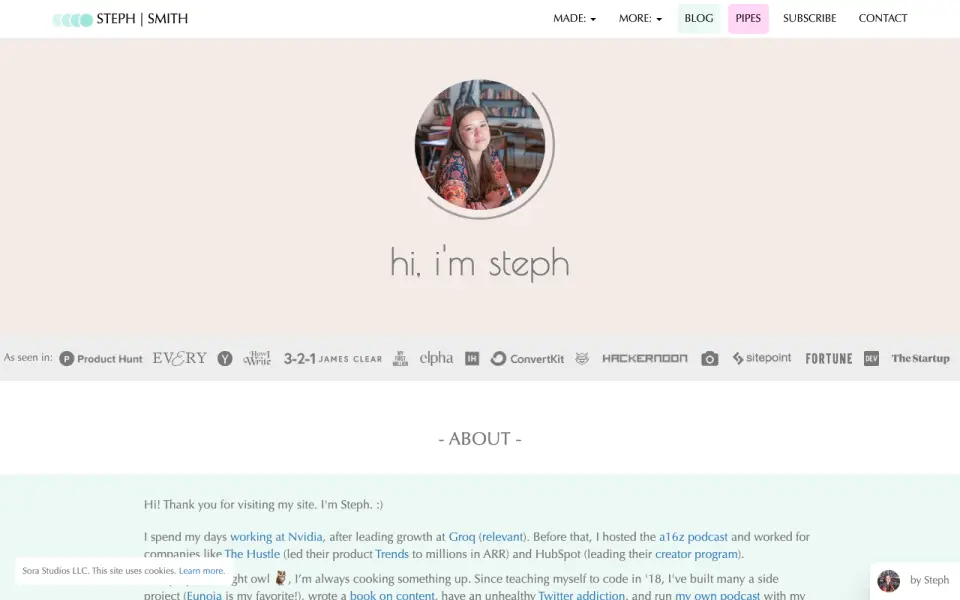
Writer and creator.
Essays and long-form pieces serve as the portfolio.
Project outcomes could be summarized in one line under each title.
10. Bruno Simon 59
bruno-simon.com · speed not measured, SEO 67, security 46, AI search 65 · full report
French developer known for interactive 3D work.
The entire site is a drivable 3D world that lets visitors explore projects as game levels.
A stronger static fallback would help on low-power phones.
How does your website score?
Enter your website to get the same score out of 100, with every issue listed. Free, about 30 seconds.
How we picked and ranked these sites
A strong portfolio website answers four questions fast: who you are, what you make, for whom, and how to reach you. Brittany Chiang’s site does this with a sticky sidebar that names her as Frontend Engineer. It states “I build accessible, pixel-perfect experiences for the web.” Josh Comeau’s site treats articles and courses as the portfolio itself.
You can check your own site free at scorebadge.com.
Most ranking pages agree on the same basics: show three to twelve strong projects, lead with outcomes or process, keep the design simple, and make contact obvious. Platforms vary. Designers often pick Framer or Webflow, developers use Next.js or Astro, and photographers lean on Squarespace or Cargo.
We reviewed 15 portfolios and list the 10 highest scorers below. They mix well-known and smaller independent examples, including sites from India, Estonia and France.
We scored each homepage out of 100 across speed, SEO, security and AI search readiness, measured on 19 November 2026, homepage only. We then looked manually at design and clarity. We scanned 15 portfolios and list the 10 highest scorers, best first. Abhay Rohit ranks first with 95 out of 100.
You can check your own site free at scorebadge.com.
What makes a good portfolio website?
A good portfolio website states who you are, what you make, for whom and where the work is on the first screen. Brittany Chiang does this with a sticky sidebar that holds her name, title and one-line pitch. Nithin M Warrier places city and discipline in the hero.
You need three to six strong projects with outcomes rather than thirty thumbnails. Gleam Studio notes that about 57 percent of viewing time stays above the fold. A short About with a real photo and a one-click contact path finish the basics.
Which platforms do the best portfolio websites use?
The best portfolio websites use Framer or Webflow when designers want visual control without code. Developers use Next.js or Astro so the site itself shows craft. Photographers and artists often choose Cargo or Squarespace for image handling.
Abhay Rohit built his site with Next.js, React, TypeScript and Three.js. Rauno Freiberg uses Next.js. You pick the platform that matches the proof you need to show.
How fast should a portfolio website load?
A portfolio website should hit Core Web Vitals targets: Largest Contentful Paint under 2.5 seconds, Interaction to Next Paint under 200 milliseconds, and Cumulative Layout Shift under 0.1. Gleam Studio lists these numbers as the practical bar. Heavy WebGL sites such as Bruno Simon’s need a static fallback so phones stay usable. You test the homepage only, because that is what visitors and AI search tools see first.
How many projects belong on a portfolio website?
A portfolio website works best with five to twelve projects and nine as a common sweet spot. Reddit threads in r/graphic_design advise against more than twelve and against fictional work that does not match the jobs you want. Weblium and Ploy both recommend six to twelve strong pieces with one-line descriptions. You keep older work in an archive so the current selection stays focused.
How do interactive portfolio websites handle reduced motion?
Interactive portfolio websites handle reduced motion by offering a pause control or static fallback. Abhay Rohit’s homepage includes a visible “Pause motion” link next to the film strip. Gleam Studio notes that respect for reduced motion is one of the rules that still works in 2026.
You test the site with the operating-system preference turned on so visitors who need less animation can still see the work. Heavy 3D sites such as Bruno Simon’s gain more from a clear static path than from extra effects.
Key takeaways
- State your role and one-line pitch on the first screen, as Brittany Chiang and Nithin M Warrier do.
- Show three to twelve strong projects with outcomes or process, not a long grid of thumbnails.
- Choose Framer or Webflow for design control, Next.js or Astro for developer proof, Squarespace or Cargo for image-heavy work.
- Keep the homepage fast enough to meet Core Web Vitals and offer reduced-motion options on interactive sites.
- Place a clear contact path in the menu or hero so the next step is obvious.
FAQ
What is a portfolio website?
A portfolio website is a personal or studio site that shows selected work, explains how it was made, and makes contact easy. It differs from Behance or Dribbble because you control the domain and the story.
How do I make a portfolio website?
You pick three to six projects and write one line on what each achieved. Then you choose a platform such as Framer or Next.js, buy a custom domain, and publish before the site feels finished. Gleam Studio lists these steps.
What should a portfolio website include?
A portfolio website should include a clear identity on the first screen, selected projects with outcomes, a short About with a photo, and an obvious contact link. Reddit users in r/web_design repeatedly name these four items.
Which platform is best for a portfolio website?
Framer and Webflow suit designers who need visual control. Next.js or Astro suit developers who want the site itself to show craft. Squarespace or Cargo suit photographers who need strong image handling.
How many projects should I show?
Show five to twelve projects. Nine is a common sweet spot according to advice in r/graphic_design. Keep only the work that matches the roles or clients you want next.
Check your own website
Enter your website to get the same score out of 100, with every issue listed. Free, about 30 seconds.
More lists